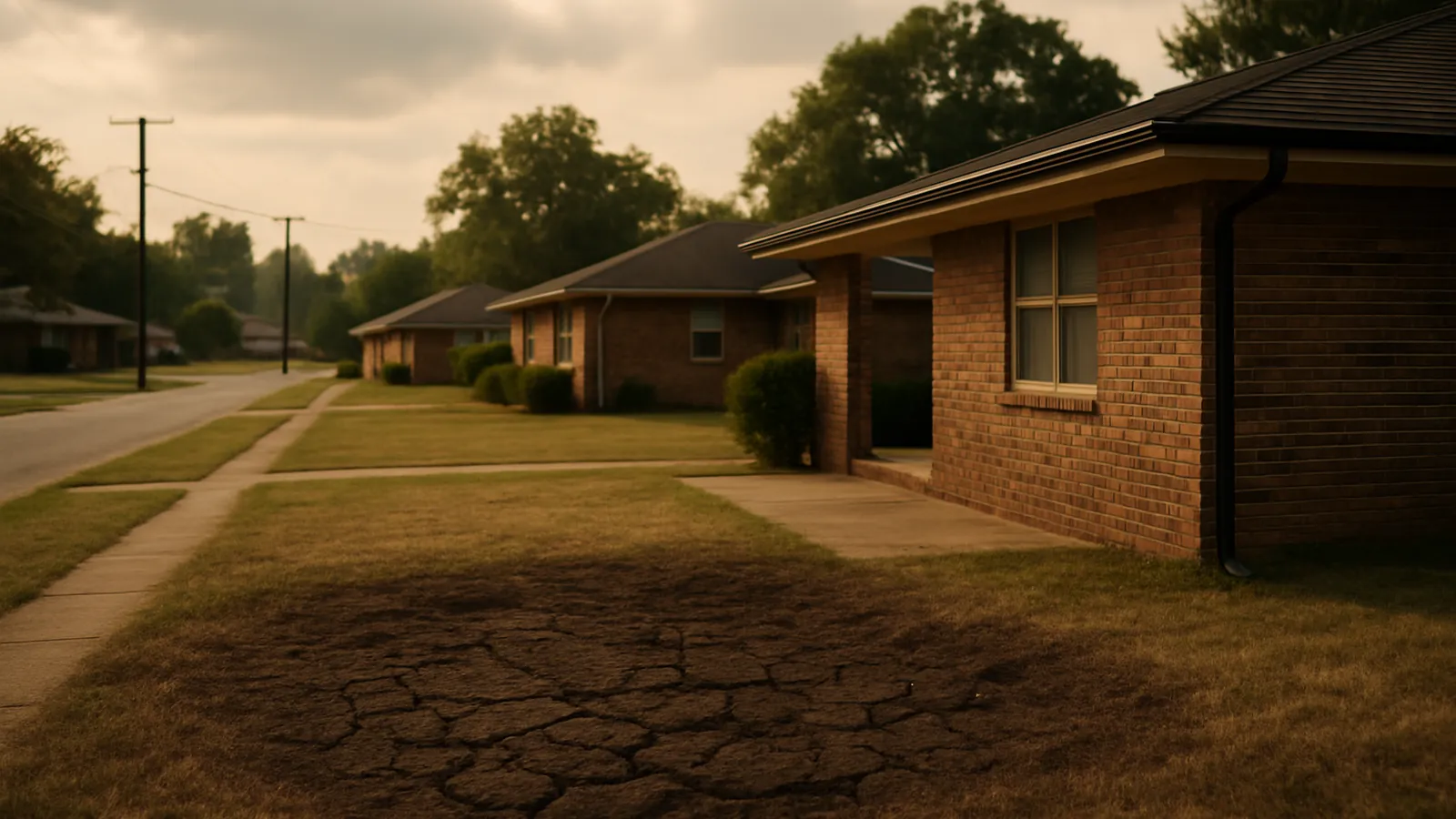
Foundation repair in Montgomery costs $4,000–$15,000 for most full repairs, with piers commonly $1,200–$3,000 each. The Black Belt's vertisol clay swells through wet winters and shrinks hard in drought Augusts — the cycle behind nearly every stair-step crack and sticking door in this market.
Below: the symptoms worth acting on, why this particular soil is so demanding, and what each class of repair actually involves.
What a moving foundation looks like from inside the house
Foundations rarely announce trouble at the footing. The house above reports it first:
- Stair-step cracks through brick or block — masonry following a footing that has dropped
- Doors and windows that stick every late summer — frames racking as the clay shrinks
- Diagonal drywall cracks from door and window corners
- Floors that slope toward one wall, or gaps opening beneath baseboards
- Separation at trim, crown, or where brick meets a porch column
- Interior slab cracks telegraphing through tile or vinyl
One symptom is worth a dated pencil mark and a season of watching. Two or more — or any crack that widens between spring and fall — is worth a measured evaluation now, while the fix is a few piers instead of a rebuilt corner.
The Black Belt: why this soil moves more than most
Montgomery sits at the edge of the Alabama Black Belt, a band of dark, calcareous vertisol clays formed over the Selma Chalk. Vertisols are defined by what they do: they shrink and swell dramatically with moisture, opening visible cracks in bare ground during dry spells and sealing shut when the rain returns. That is normal soil behavior here — and it is brutal on anything built on top of it.
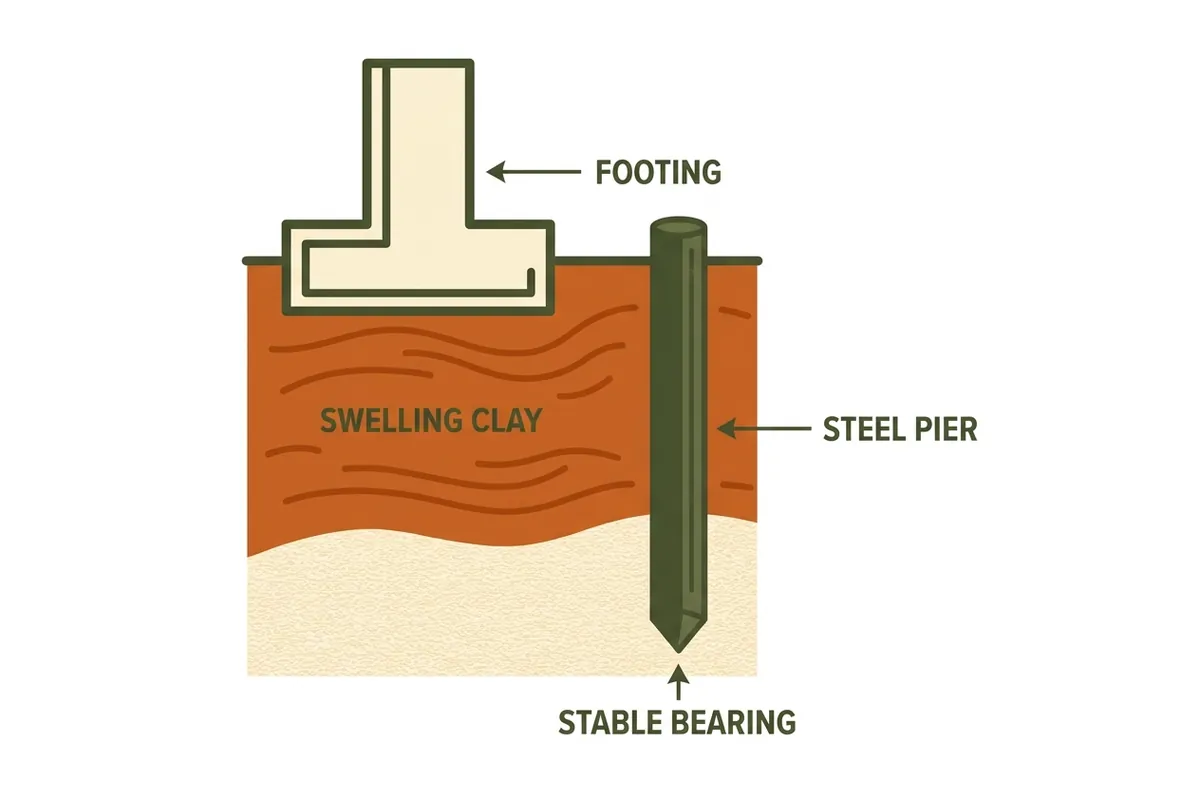
The mechanism runs on a yearly clock. Wet Alabama winters saturate the clay, which expands and presses upward and outward against footings. Then a hot, dry August pulls that moisture back out, the clay contracts, and support withdraws from beneath the foundation — often unevenly, because the shaded north side of a house dries slower than the sun-baked south side. Roughly 53 inches of annual rain arriving unevenly through the year keeps the cycle loaded. A repair that works here has to either reach below the active clay or manage the moisture that drives it.
The repairs that fix Montgomery houses
| What you see | What's happening | The fix | Typical range |
|---|---|---|---|
| Stair-step cracks, dropping corners, sloped floors | Footing losing support as clay shrinks | Piers driven to stable bearing | $4,000–$15,000 |
| Interior slab cracks, uneven slab floors | Slab moving with the clay beneath it | Slab piering or interior support | $3,500–$12,000 |
| Cracks in brick, block, or slab widening | Movement opening paths through masonry | Injection and reinforcement | $400–$1,500 |
| Water pooling at the foundation, wet crawl | Roof and lot water feeding the swell cycle | Grading, extensions, and drains | $1,500–$6,000 |
| Sunken driveway, patio, walk, or porch slab | Fill consolidating over shrinking clay | Polyurethane lifting | $500–$2,500 |
Two or more symptoms usually share a single cause. Scoping them in one evaluation is how the repair holds — and how you avoid paying two mobilizations for one clay problem.
The decisions behind the table go deeper on their own pages: how we read settlement on Black Belt vertisols, what the in-town pier-and-beam stock needs, when helical piers beat push piers, what water management means without basements, what insurance covers after a slab leak, and when an independent structural engineer is worth the fee.
Slab or pier-and-beam: Montgomery has both
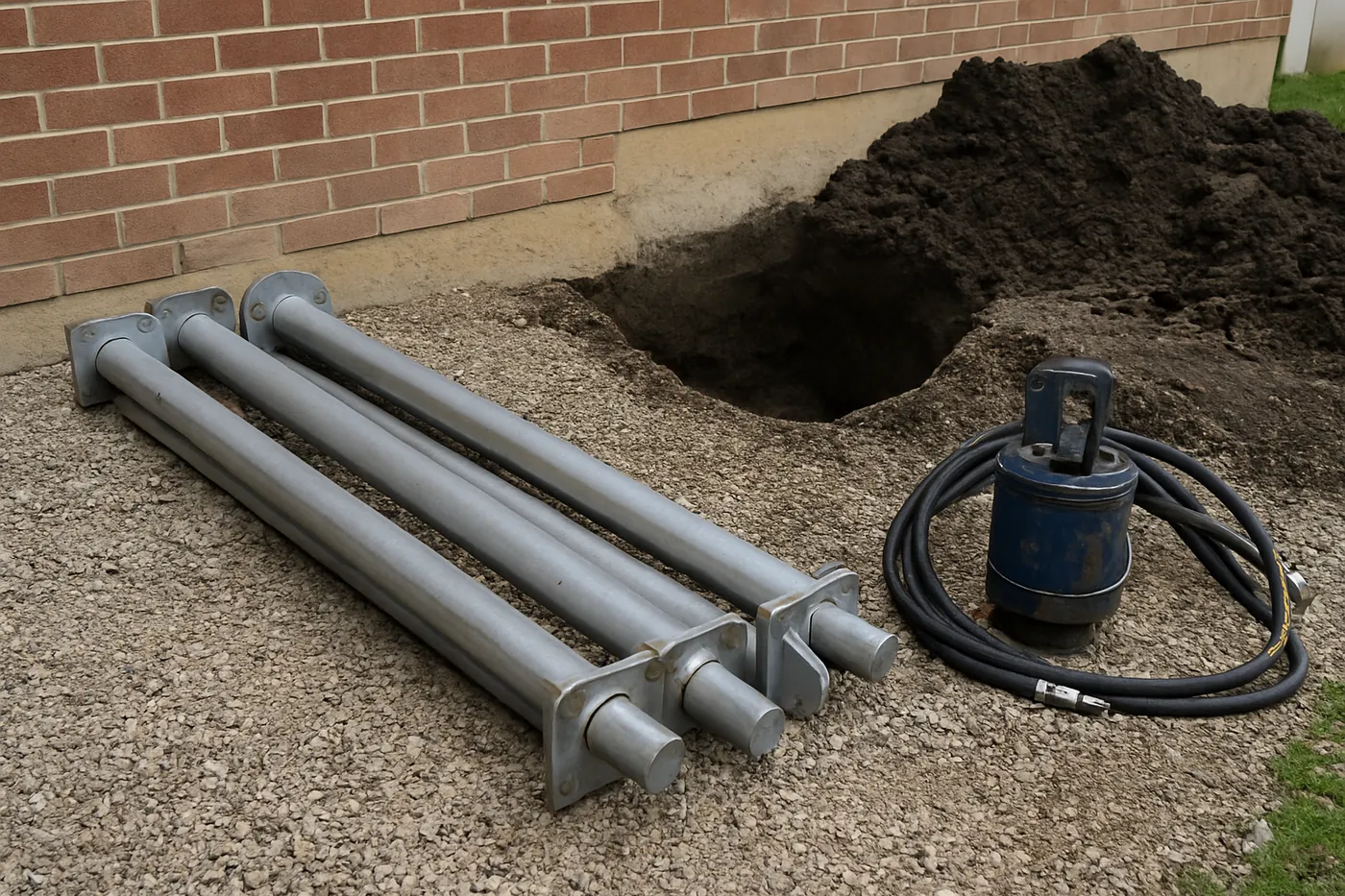
The city's housing splits along a line that decides what an evaluation looks for. The mid-century and newer suburbs — much of east Montgomery, Pike Road, the Prattville and Millbrook growth — sit on slab-on-grade foundations, where clay movement shows up as interior slab cracks, racked door frames, and floors that read out of level with a laser before anyone sees damage. The older in-town neighborhoods stand on brick pier-and-beam foundations, where the same soil produces sagging floors, crushed pier caps, and posts that have settled into bare ground where a proper footing belonged. Same clay, two different patients — and two different repair playbooks.
How the evaluation works
We walk the house inside and out: crack widths measured and photographed, floor elevations shot with a laser, exterior grading and downspouts traced for the water story, and crawl framing probed where the house has one. You get a written scope naming the cause, the repair, the price per line, and the timeline — and if the honest finding is "mark it and watch it through one more dry season," that is what the report says. The evaluation is free either way.
Foundation repair questions Montgomery homeowners ask
How much does foundation repair cost in Montgomery?
Most full repairs here run $4,000 to $15,000, with individual piers commonly $1,200 to $3,000 and single crack repairs from about $400. What moves your number is pier count, whether the foundation is slab or pier-and-beam, and how much drainage correction the lot needs. Every figure follows a free measured evaluation. Our Foundation repair cost breakdown for Montgomery shows what drives each figure, line by line.
Why is Montgomery so hard on foundations?
The Black Belt. Montgomery sits on dark vertisol clays formed over Selma Chalk — among the most expansive soils in the Southeast. They swell with force through wet winters and shrink away from footings in drought-prone Augusts. Foundations here don't fail from one event; they fail from that cycle repeating for decades.
My doors stick every August and free up by winter. Is that a problem?
That rhythm is the clay talking, and it's the most common early symptom in this market. Mild seasonal sticking that returns to normal can be watched with a dated pencil mark. Sticking that worsens year over year, or arrives alongside new stair-step cracks, means the footing is losing ground each cycle and deserves a measured look.
Do slab homes and pier-and-beam homes get different repairs?
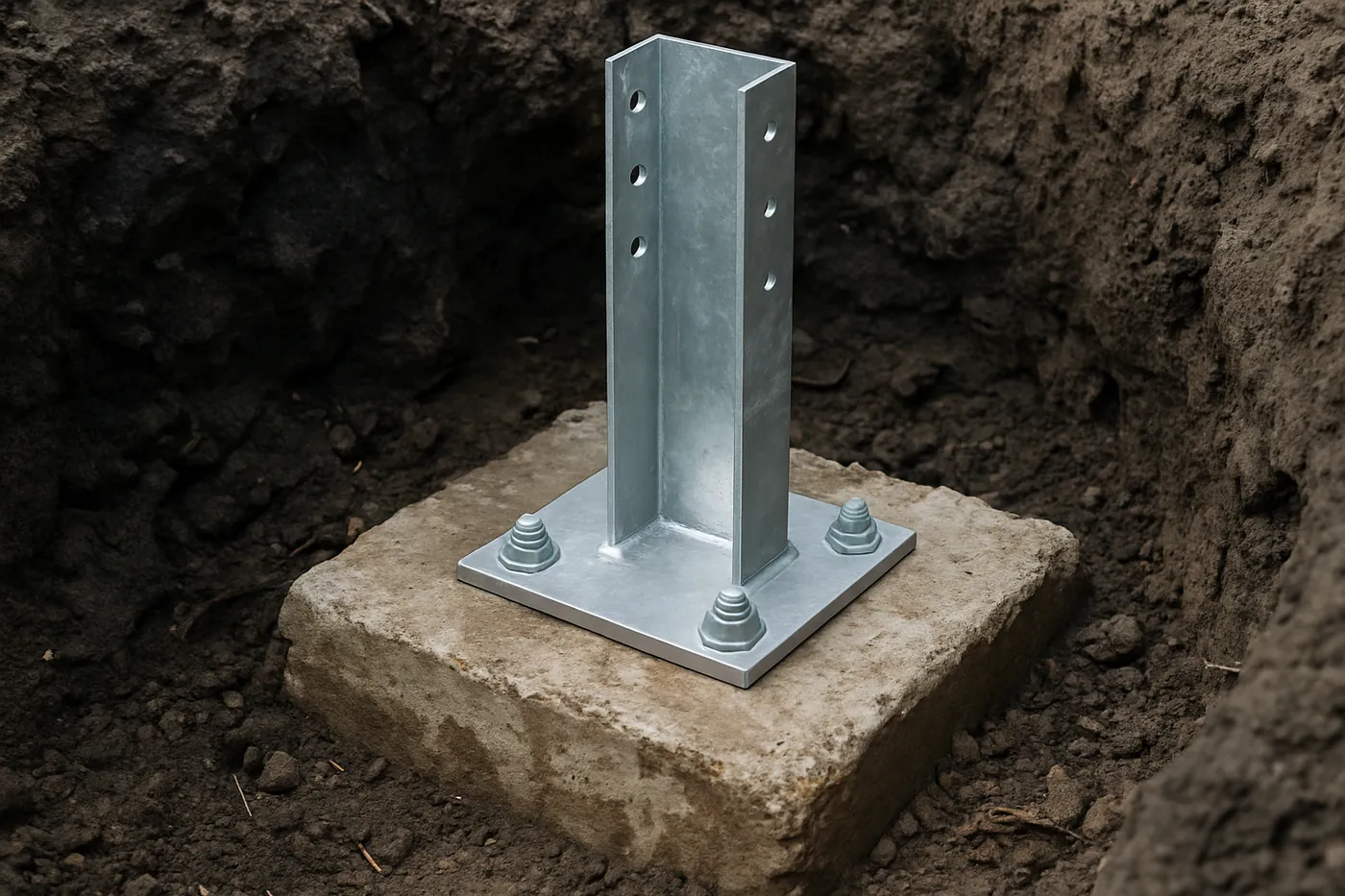
Slab homes and pier-and-beam homes do get different repairs, and Montgomery has plenty of both. Mid-century slab suburbs typically need piering at the perimeter or interior slab support, sometimes with polyurethane leveling. Older in-town homes on brick piers need pier repair or replacement, sill and girder work, and proper footings under posts standing on bare ground. The evaluation identifies which house you own before pricing anything.
Is a stair-step crack in my brick serious?
It depends on width and trajectory. Hairline stair-steps that stay put through a full wet-dry cycle are usually the house settling into the clay's rhythm. Cracks wider than a quarter inch, cracks that keep growing between seasons, or cracks paired with sloping floors indicate active movement — those get measured, photographed, and priced.
How deep do piers go in Black Belt soil?
Past the active zone, which is what matters here. Alabama's shallow frost line is irrelevant to foundation design in this region — moisture movement is the driver, and the clay's seasonal swelling can reach several feet down. Piers are driven to refusal on stable bearing below that layer, and the pressure at refusal is logged for every pier we install.
Does drainage really matter that much?
On this soil it's half the repair. Roof water dumped at the foundation keeps one side of the house swollen while the far side bakes dry in August — a moisture differential that racks the structure. Downspout extensions, regrading, and swales often cost a few hundred dollars and remove load the foundation fights every season. They lead our scopes for that reason.
Will my homeowner's insurance cover this?
Usually not. Most policies exclude earth movement and settling, which is what Black Belt clay does by nature. Exceptions exist for sudden events — a plumbing leak washing out soil beneath a footing, for instance. We document cause during the evaluation, which is exactly what an adjuster conversation needs if a claim is worth filing.
Foundation repair across the River Region
Prattville · Millbrook · Wetumpka · Pike Road · Deatsville · Tallassee · Selma · Clanton · Troy · all service areas
Get a free Montgomery foundation evaluation
Tell us what the house is doing — stair-step cracks, doors that stick every August, sloping floors, separating trim — and we’ll schedule an evaluation with photos and measurements. We reply the same business day.