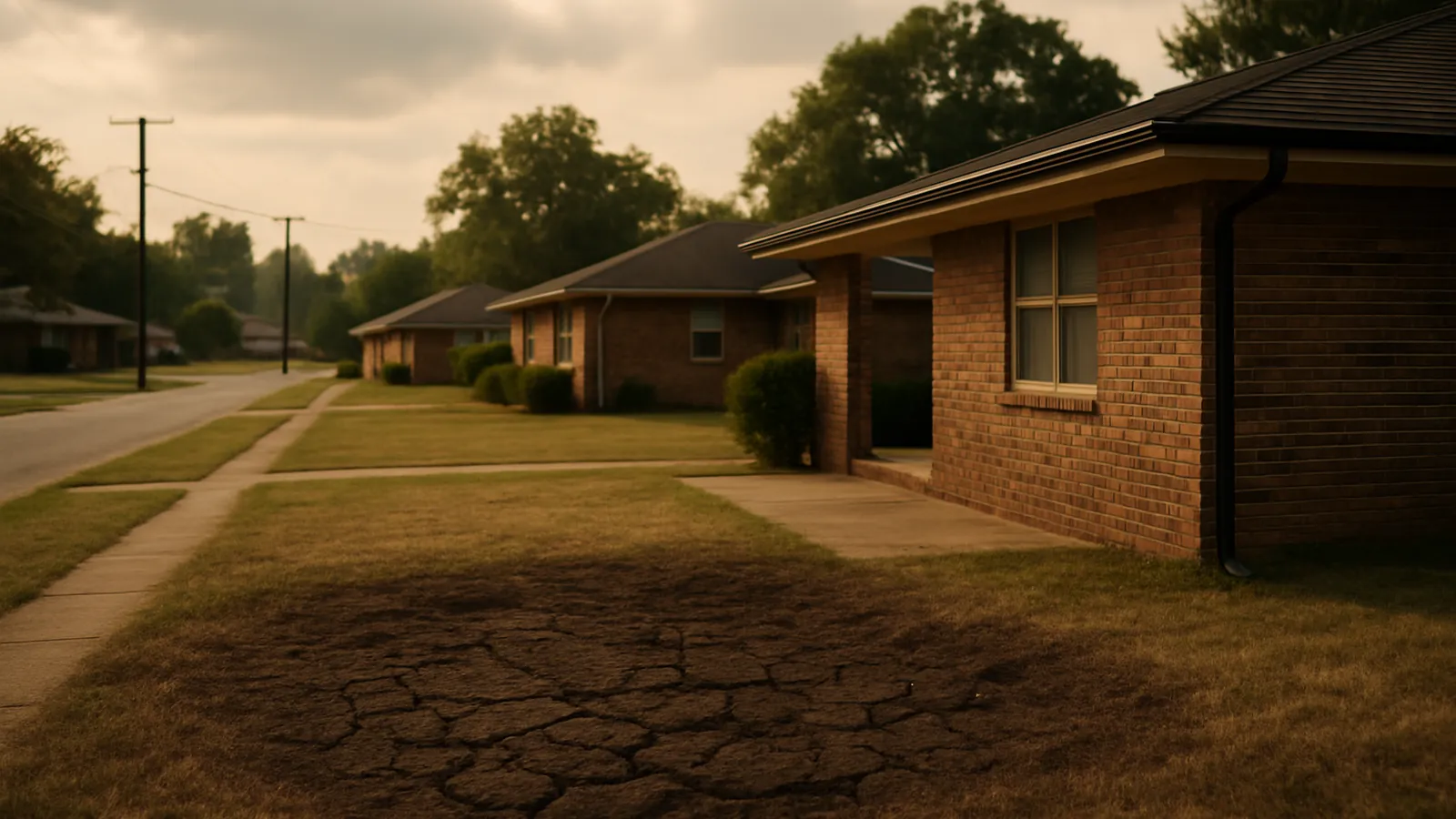
Deatsville homeowners pay $4,000–$15,000 for most structural foundation repairs, from about $400 for a single crack injection. The regional clay changes volume with the seasons, withdrawing support from footings during dry spells — which is what a measured evaluation is built to detect before it worsens.
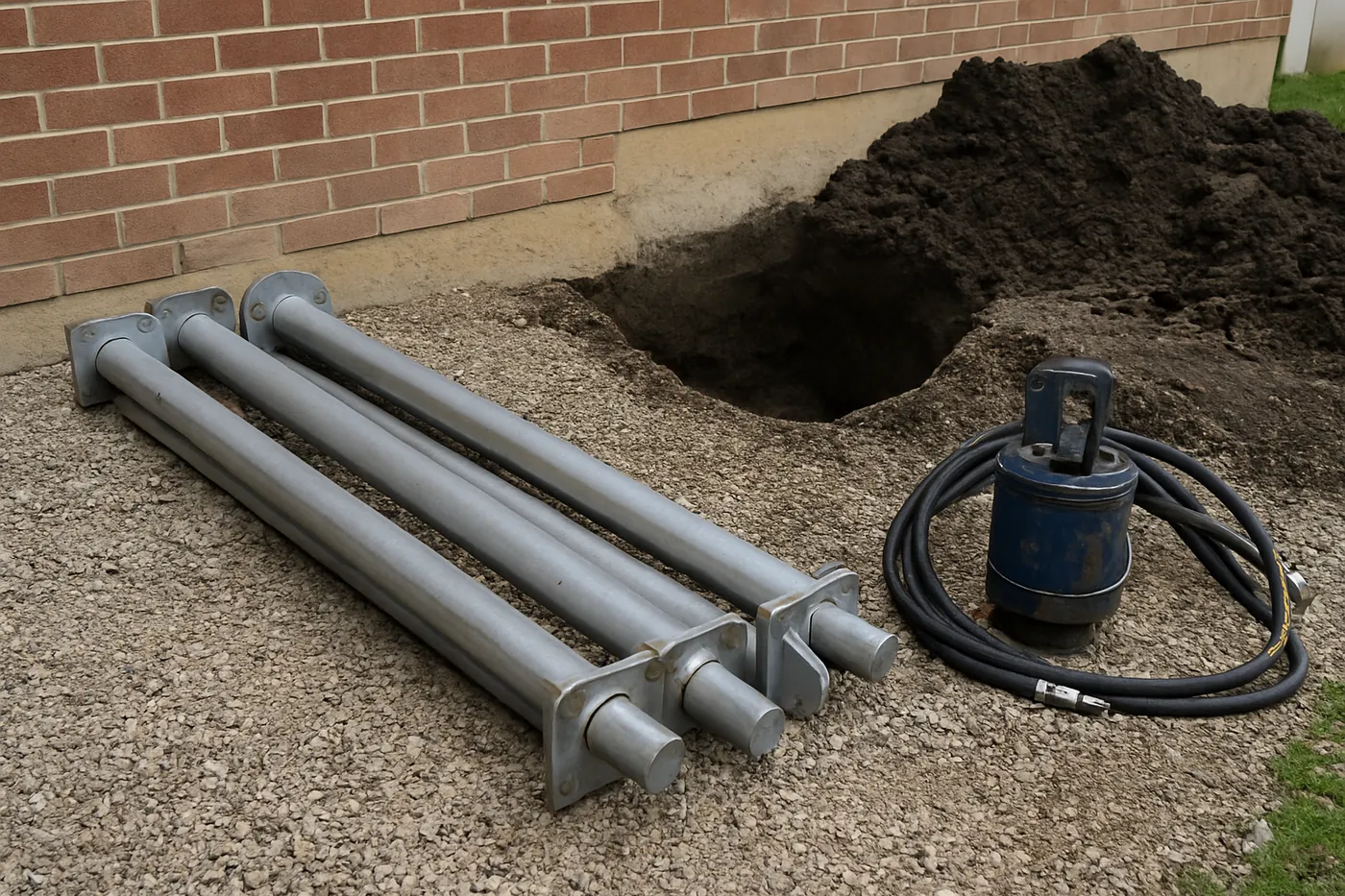
One-off houses on individual ground
Deatsville's housing wasn't mass-graded into subdivisions, which changes both the problems and the diagnostics. Homes built individually across decades sit on ground that was prepared to whatever standard that builder used that year, and the variation shows: two neighbors on the same road can present completely different foundation conditions. There's no development-wide pattern to lean on, so the evaluation leans entirely on measurement.
Acreage does bring one real advantage — room. Drainage solutions that are impossible on a tight suburban lot are straightforward here: swales with somewhere to go, discharge lines that reach genuine daylight, and regrading that doesn't run into a property line ten feet from the wall. On Black Belt clay, that room often means the moisture half of the repair costs less and works better.
Septic fields, wells, and where we dig
Rural lots carry buried infrastructure that suburban ones don't: septic tanks and drain fields, well lines, and private utility runs that predate any locate service. Before trenching or setting piers, those get located and marked — and drainage discharge gets planned to route away from the septic field rather than into it. It's a routine step, but it's one that generic scopes forget until a shovel finds it.
Asked in Deatsville
Do you service rural Elmore County addresses?
Yes — Deatsville is a regular route for us. Rural travel is quoted honestly in the scope rather than hidden in the line items, and we batch work in the area where scheduling allows. Acreage lots are often easier to work than tight suburban ones, with real room for equipment and drainage discharge.
We have a septic system. Does that change the work?
It changes the planning. Septic tanks, drain fields, and private well lines get located and marked before any trenching or pier excavation, and drainage discharge is routed away from the field rather than into it. It's routine, but it's the kind of step generic scopes miss until a shovel finds it.
Is drainage cheaper to fix out here?
Usually, and it works better. Acreage means swales that have somewhere to go and discharge lines that reach genuine daylight — options that simply don't exist on a tight lot. On Black Belt clay, where moisture control is half the repair, that room often reduces the structural scope as well.
Our house was built by an individual builder decades ago. Does that matter?
It matters for diagnosis. One-off rural construction varies enormously in footing depth and preparation, so there's no development-wide pattern to lean on — two neighbors can present entirely different conditions. The evaluation relies on measurement rather than assumptions about how homes 'around here' were built.
Next step for your Deatsville house
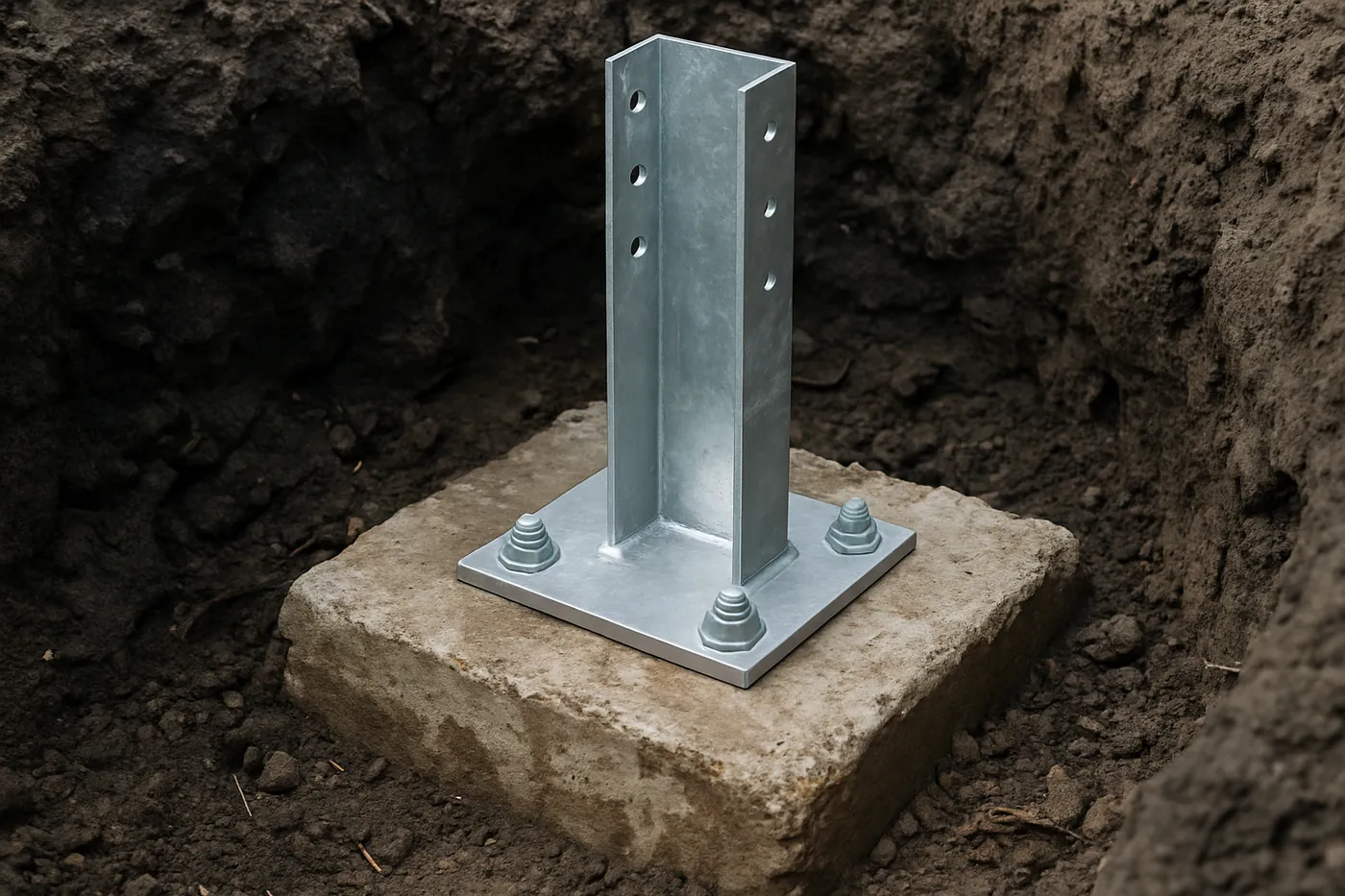
Date and pencil-mark the crack, then get the baseline — knowing is cheap. The free evaluation takes about an hour and leaves you a written report with elevations. Costs are itemized in the cost guide; nearby communities are under service areas.
Get a free Montgomery foundation evaluation
Tell us what the house is doing — stair-step cracks, doors that stick every August, sloping floors, separating trim — and we’ll schedule an evaluation with photos and measurements. We reply the same business day.