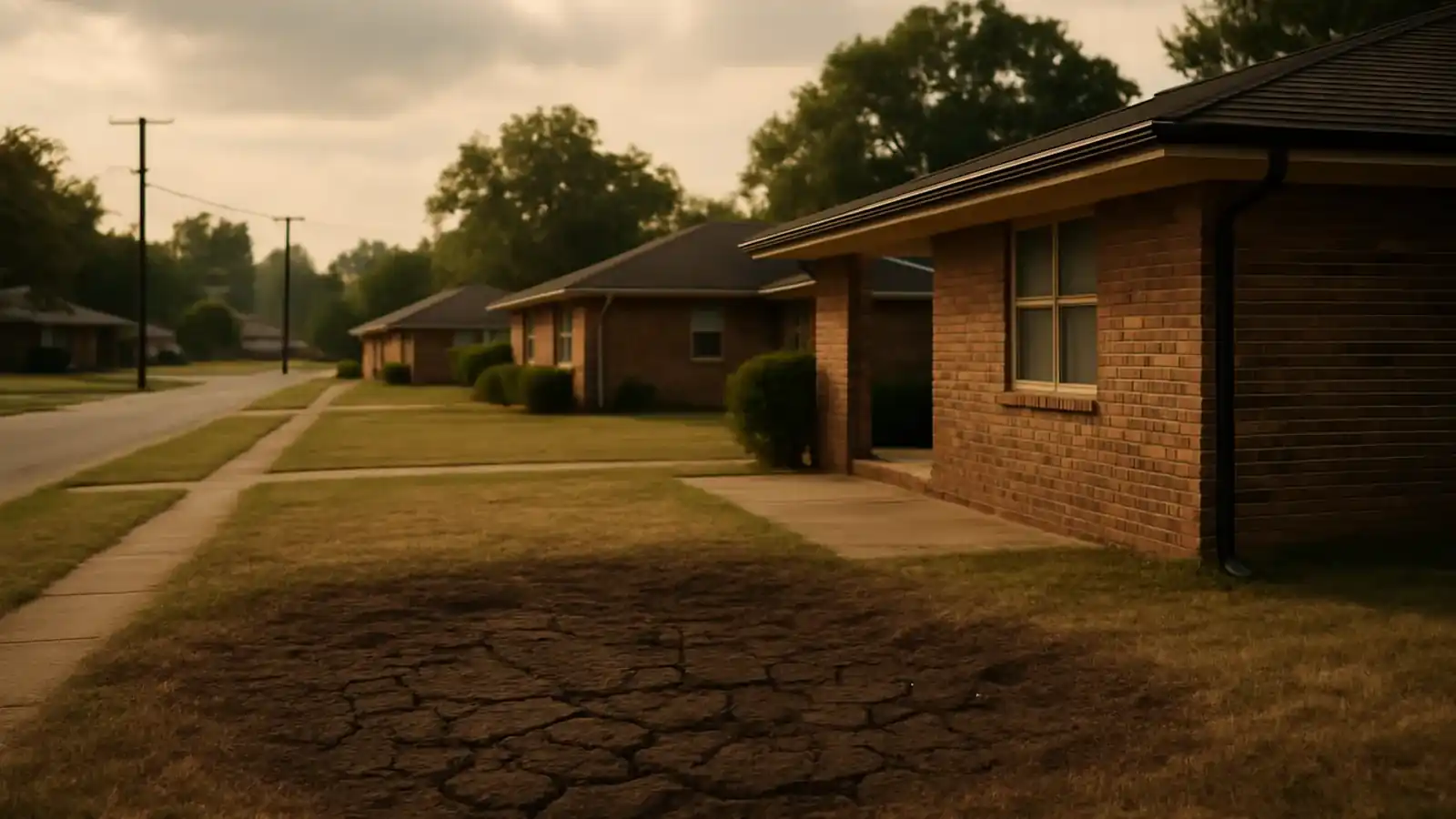
Foundation repair in Pike Road runs $4,000–$15,000 for most full repairs, with piers commonly $1,200–$3,000 each. Two-thirds of the town's homes are less than twenty-five years old, built big on Black Belt clay that swells in wet winters and shrinks in dry Augusts. Every figure should follow a measured evaluation.
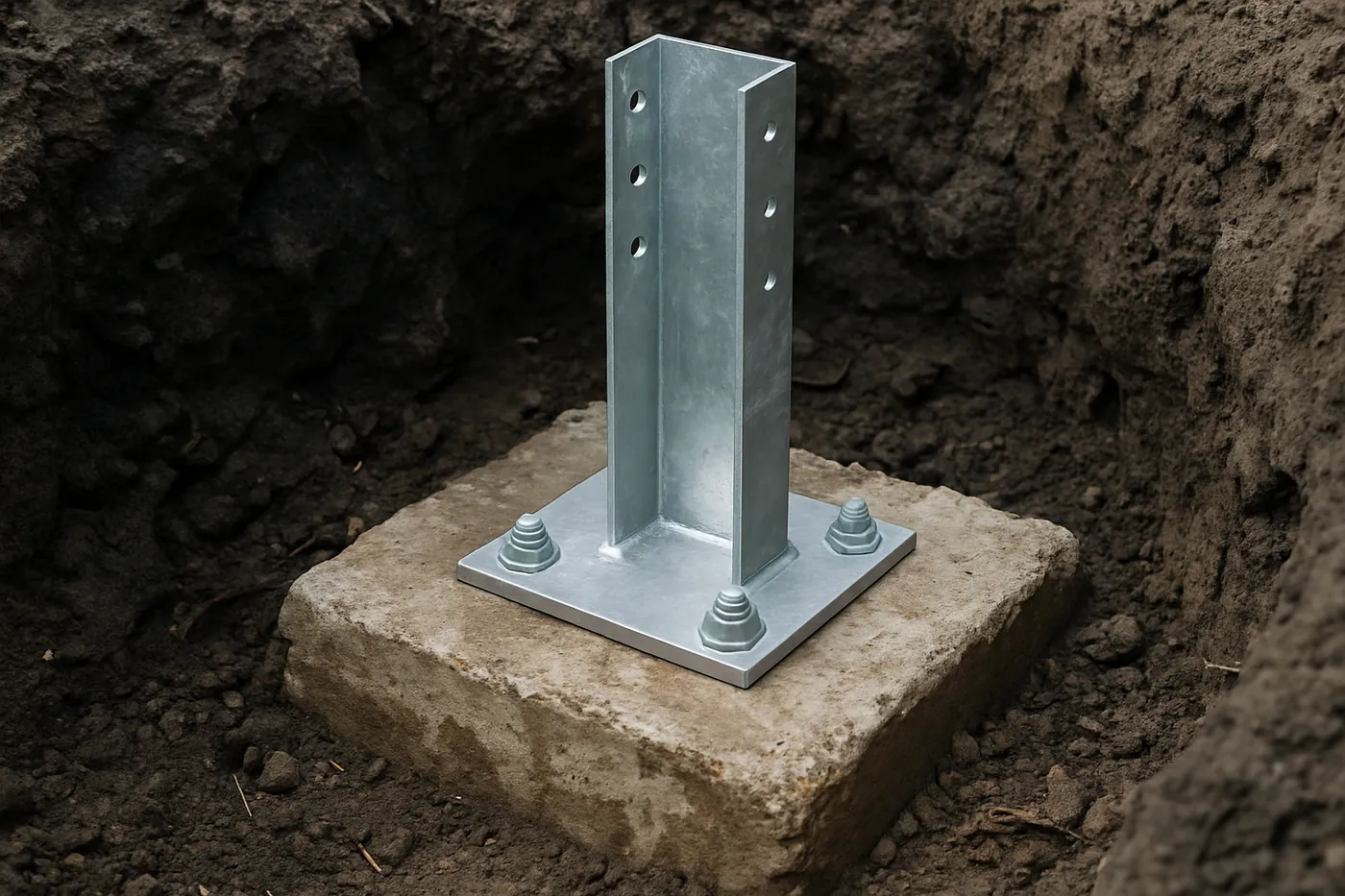
Big houses, big footprints, more ground to disagree with
Pike Road's growth built substantial homes on generous lots, and footprint size changes the foundation math. A wide slab spans more ground, and on Black Belt clay, more ground means more opportunity for one section to sit on soil that behaves differently than another. Differential movement across a large slab shows up as diagonal drywall cracking and doors racking in one wing while the rest of the house reads perfectly level.
Large-lot homes also tend toward long driveway runs and extensive flatwork, which is why concrete leveling often belongs on a Pike Road scope. Those slabs sit directly on the same cycling clay with no footing beneath them, and they report the movement earlier than the house does, which makes a stepped driveway joint a useful early signal worth mentioning at the evaluation.
Newer doesn't mean immune
A common belief in Pike Road is that the house is too new for foundation trouble. On this soil, age is a weak predictor. What predicts movement is the clay's seasonal amplitude, how the lot drains, and whether builder fill is still consolidating. None of which care about the build date. An evaluation can rule it out, and a laser survey on a newer home often ends the worry in an hour.
A town built in the last thirty years
The Census Bureau's 2020-2024 American Community Survey counts about 3,970 homes in Pike Road, with a median build year of 2006. A third went up in the 2010s, close to another third in the 2000s, and about 17% in the 1990s; fewer than one in ten predates 1980. That makes Pike Road one of the youngest towns this site covers, and it means most foundation questions here concern graded pads and large slabs still in their first two or three decades.
Pike Road's own building department
Pike Road runs its own Building Department rather than relying on the county, and inspection requests go to its staff by email, named by inspection type. The department's page does not list foundation repair specifically, so ask it directly whether piers or slab work on your house need a permit and an inspection. The town's Planning Department also publishes construction and design standards for new development.
Asked in Pike Road
Why would a house built in the last decade need foundation repair?
Because the clay doesn't check the build date. Black Belt vertisols cycle every year regardless of construction age, and newer subdivisions often add engineered fill that's still consolidating. Age is a weak predictor here; soil behavior, lot drainage, and slab size predict far better.
Does a bigger house cost more to repair?
Sometimes, though not proportionally. Price follows how much of the foundation actually moved, not total square footage: a large home with settlement confined to one wing may need fewer piers than a small home that dropped across a full side. The floor-level survey defines the affected run, and the scope prices that.
Our driveway has stepped at the joints. Related to the house?
Often the same cause showing up earlier. Flatwork sits directly on the cycling clay with no footing, so it reports movement before the house does. A stepped driveway joint is worth mentioning at the evaluation. It's a useful early signal, and leveling it is inexpensive compared with what it can foreshadow.
What's the right first step for a Pike Road homeowner who's just worried?
The laser survey. It takes about an hour, produces actual elevation numbers across your floor plan, and frequently ends the worry outright. When it does find movement, you have a documented baseline to measure future change against, which is valuable whether you repair now or watch.
Booking a Pike Road evaluation
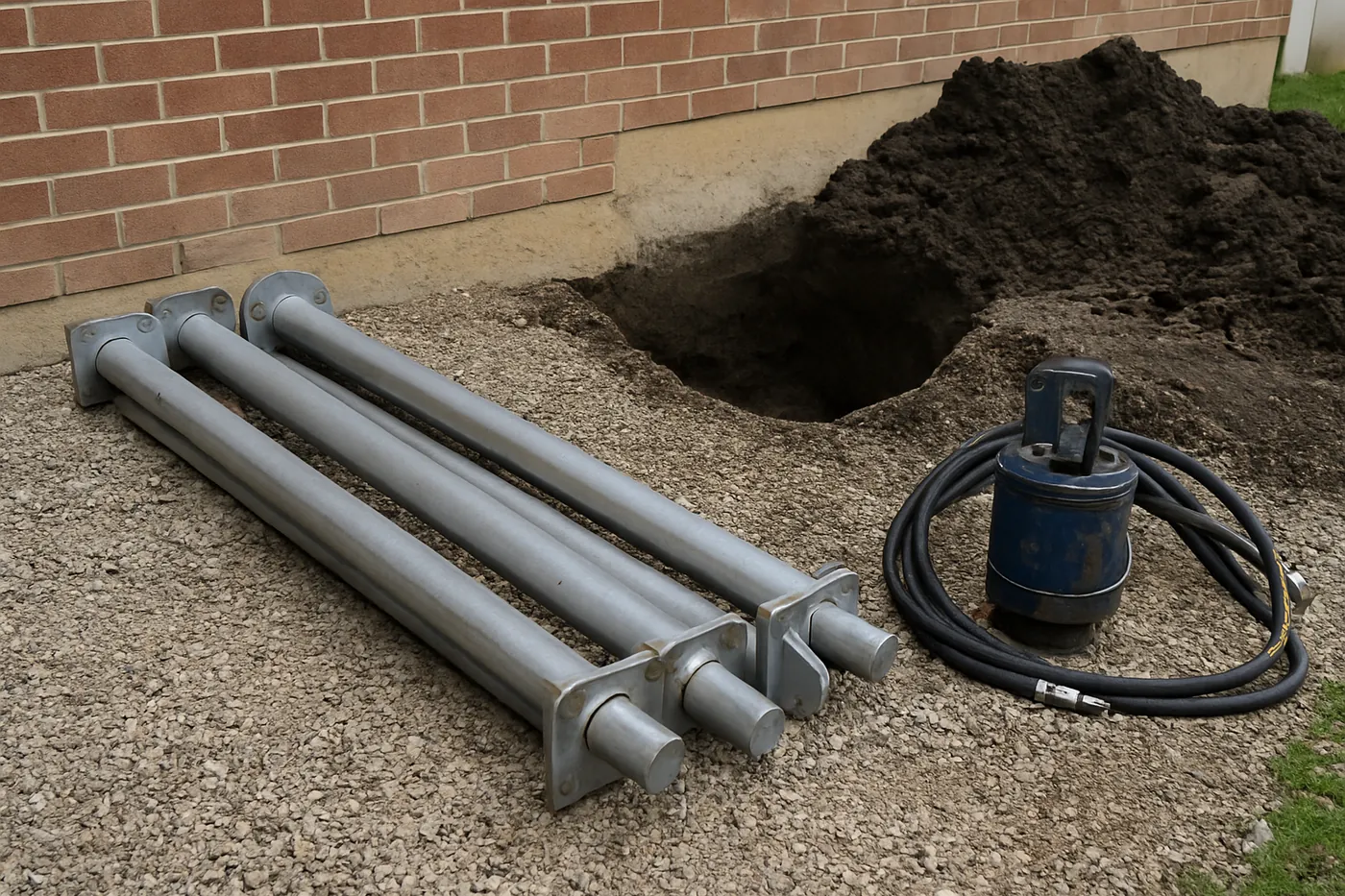
A specialist who covers Pike Road will phone you to choose a time; send the form or call. If a builder or another company has already looked, keep that paperwork and ask for every new line to rest on a measured reading, so the two are easy to set side by side. The cost guide covers typical prices, and service areas lists the surrounding towns.
Get a Montgomery foundation evaluation
Tell us what the house is doing (stair-step cracks, doors that stick every August, sloping floors, separating trim) and we'll pass it to one independent local specialist for an evaluation. A local specialist who works in Montgomery will call you back.