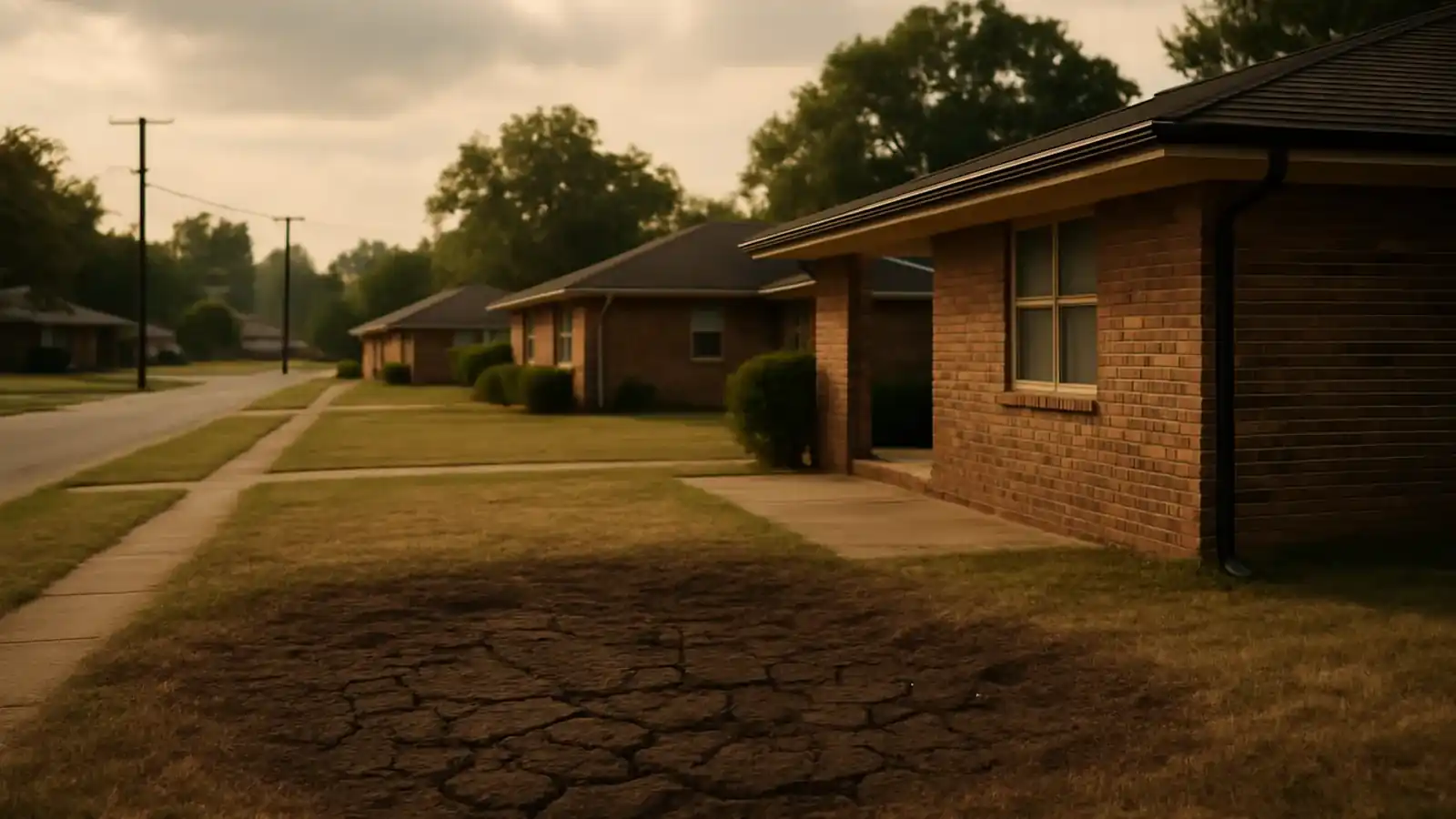
Typical Montgomery prices: $4,000–$15,000 for a full structural repair, $1,200–$3,000 per pier, $3,500–$12,000 to repair a slab, $400–$1,500 to repair a crack, and $500–$2,500 to lift sunken concrete. Drainage correction, which is often the first job a River Region lot needs, can start below $500.
This page covers what you get for each range, why Black Belt clay pushes a Montgomery quote higher or lower, and the questions that tell a fair bid from an inflated one.
Montgomery foundation repair prices by fix
| Repair | Typical range | What it covers |
|---|---|---|
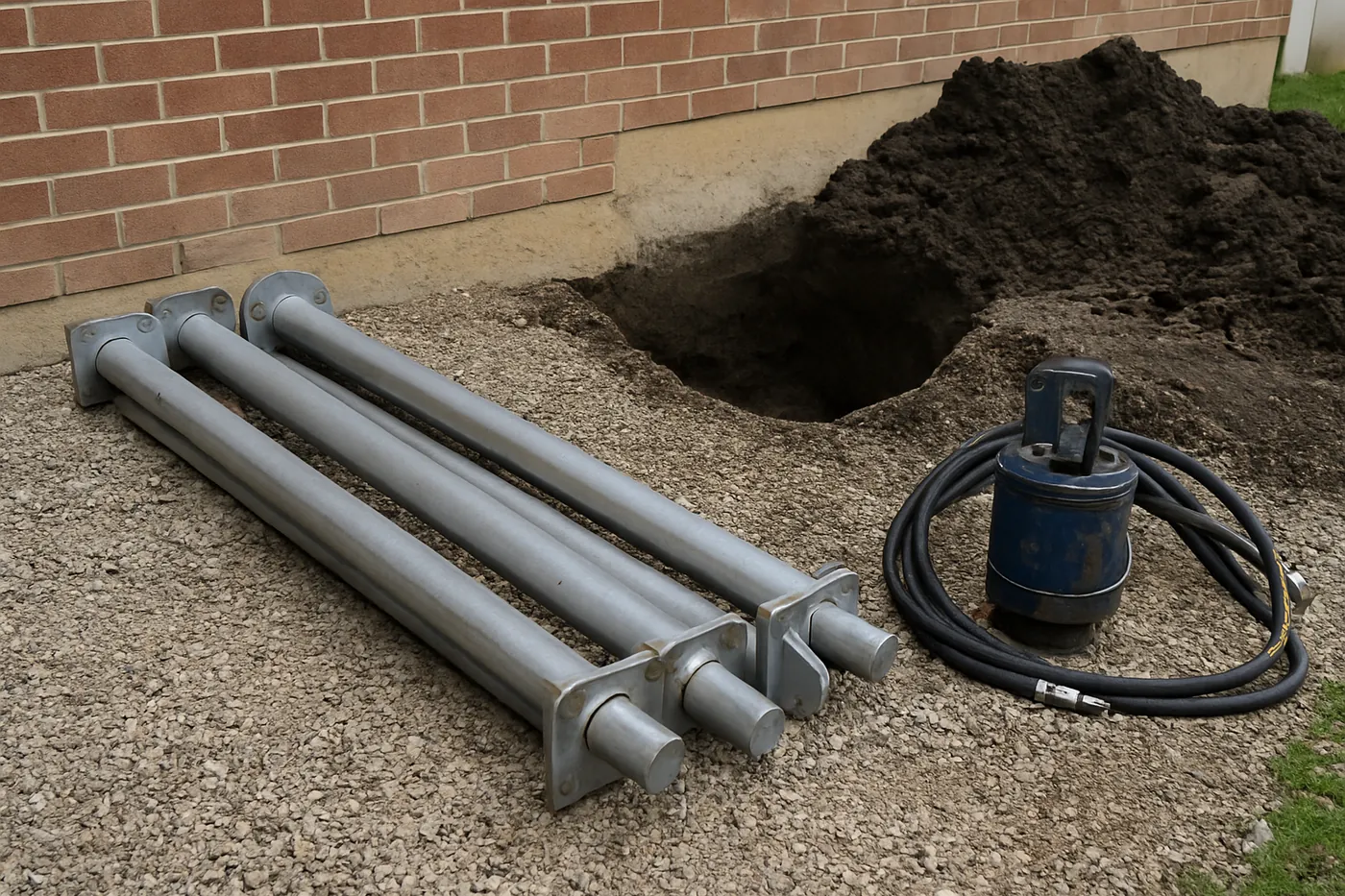
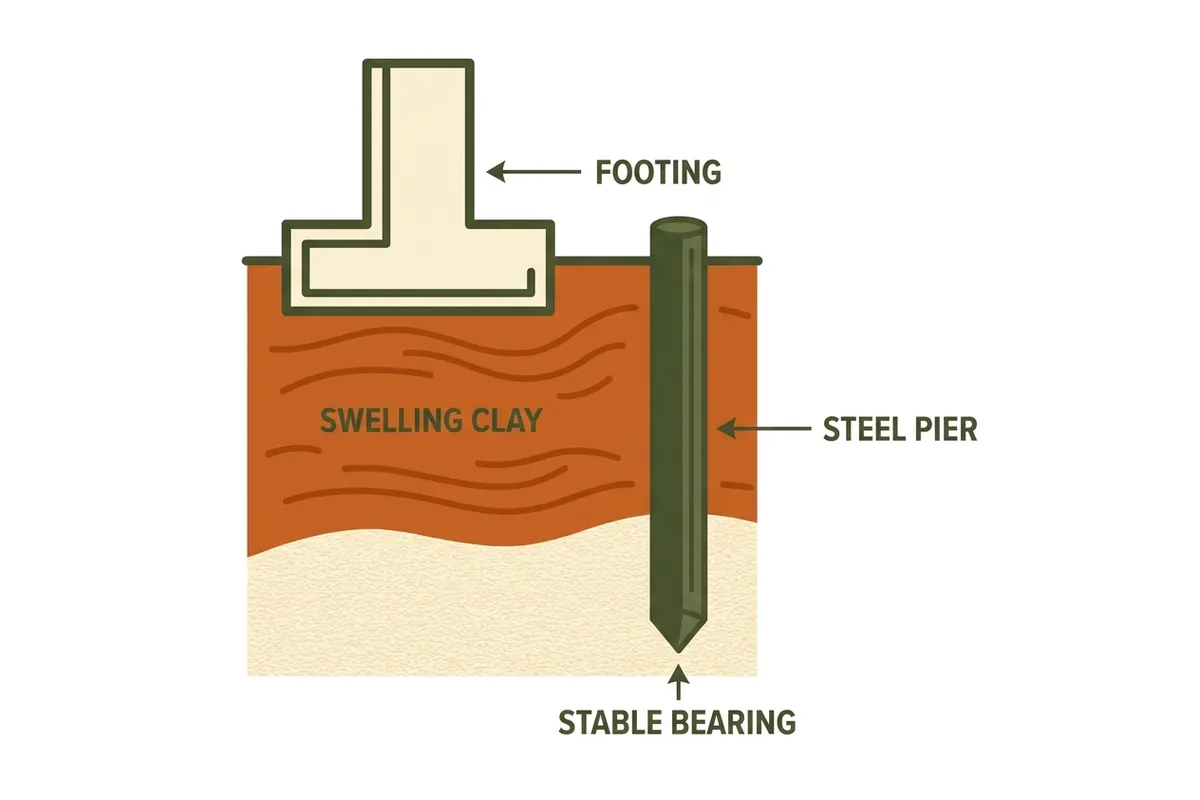
| Piering / underpinning | $4,000–$15,000+ | Steel piers driven past the active zone to stable bearing, bracketed to the footing and logged individually with the depth each one reached |
| Slab repair | $3,500–$12,000 | Perimeter piers, interior support, or both, placed where the laser survey shows the slab has dropped |
| Crack repair | $400–$1,500 | Polyurethane or epoxy injection, carbon staples, and repointing on the brick pier-and-beam stock in town |
| Drainage correction | Under $500–$6,000 | Downspout extensions and regrading cost least; swales and drain lines that discharge to a confirmed outlet cost more, and they are what lifts the winter swell off the footings |
| Concrete leveling | $500–$2,500 | Polyurethane lifting for drives, patios, walks and porch slabs that have followed the clay down |
Figures reviewed July 2026. Where to check the facts: the Black Belt vertisol series under a given address are mapped in the USDA Web Soil Survey, and Montgomery rainfall comes from the NOAA U.S. Climate Normals for the Montgomery airport station. The repair ranges are typical market figures, and each one is explained on this page.
The four factors that move a Montgomery quote
1. How much of the foundation moved. The price tracks the length of foundation that actually dropped, not the size of the house. A laser floor survey measures that length; a quick walk around the outside tends to overstate it.
2. Depth to stable bearing: the big one here. Black Belt vertisols are among the most expansive soils in the Southeast, and the active zone can run several feet down before anything stops moving seasonally. Deeper refusal means more pier sections at every location, and this is comfortably the largest source of legitimate variation between two honest bids in this market.
3. Foundation type. Mid-century slab-on-grade suburbs, older in-town homes on brick pier-and-beam, and additions that are one or the other bolted onto the opposite. Montgomery has all three, and occasionally all three on one house.
4. Access and site conditions. Narrow side yards, established beds and trees, patios and drives, and septic fields on rural lots all take extra labor. That time is real and predictable, and it should appear as its own lines in the scope.
Comparing bids like an inspector
- Ask to see the floor elevations. Whoever recommends piers should be able to point to the level readings that call for each one.
- Compare depths before totals. On this soil the depth to refusal is what separates two bids. A cheaper quote with shallower piers is not a discount, it is a different repair that stops in the moving zone.
- Check whether drainage is in or out. The mechanism here is moisture swing, so a structural bid that ignores water is an incomplete bid.
- Confirm the warranty transfers to the next owner, in writing.
- Ask what they would do if it were their house, and be wary of anyone whose answer is always the largest scope.
When the honest answer is "spend nothing yet"
Some Montgomery evaluations end with no repair at all, and the reason is the seasonal cycle, not kindness. Wet winters swell the clay against the footings and dry late summers pull it away, so a door that binds in August and swings free by December may simply be tracking the soil. A hairline crack that has not been watched through a full wet and dry year has not told you anything yet.
The right report for those houses is a dated set of readings and a written plan to measure again, as carefully set out as a pier plan would be. A company that recommends work on every house it visits is not really measuring.
Cost questions, straight answers
What's the average foundation repair cost in Montgomery?
No single average means much here; the range is the real answer. A single crack injection starts near $400, drainage correction runs $1,500 to $6,000, slab repair $3,500 to $12,000, and full piering $4,000 to $15,000 or more depending on how many piers the house needs. Your own figure depends on how much of the foundation moved, and a floor-level survey can measure that in about an hour.
Why do two Montgomery bids differ by thousands?
Usually because they price different work, not because one found a bargain. Line up the pier count, the depth each pier is specified to reach, whether drainage correction is included, and whether the warranty transfers. A bid with no measurements behind it is a guess with a number attached. Ask both companies for the floor elevations they took.
Is financing normal for this kind of work?
Financing is common, and splitting the job into stages is the other option worth raising. Black Belt clay suits staging: drainage correction first, the cheaper step that slows further movement, and structural work second. Settlement that is speeding up should not wait, and a good evaluation states clearly whether staging is safe for your house.
Does foundation repair pay off at resale?
Here it usually protects value rather than adding to it. Buyers' inspectors in the River Region look for foundation movement, and an unrepaired foundation invites a renegotiation that can cost more than the repair would have. A documented, warrantied, transferable repair turns that finding into a closed item.
Is there a charge for the evaluation?
It depends on the company. Many local specialists don't charge for the first visit; ask when they call, before they come out. Either way, ask for photos, crack readings, a laser floor survey and a written, itemized scope, even when the honest advice is to mark the crack, watch it through one dry season and spend nothing yet.
Get a Montgomery foundation evaluation
Tell us what the house is doing (stair-step cracks, doors that stick every August, sloping floors, separating trim) and we'll pass it to one independent local specialist for an evaluation. A local specialist who works in Montgomery will call you back.