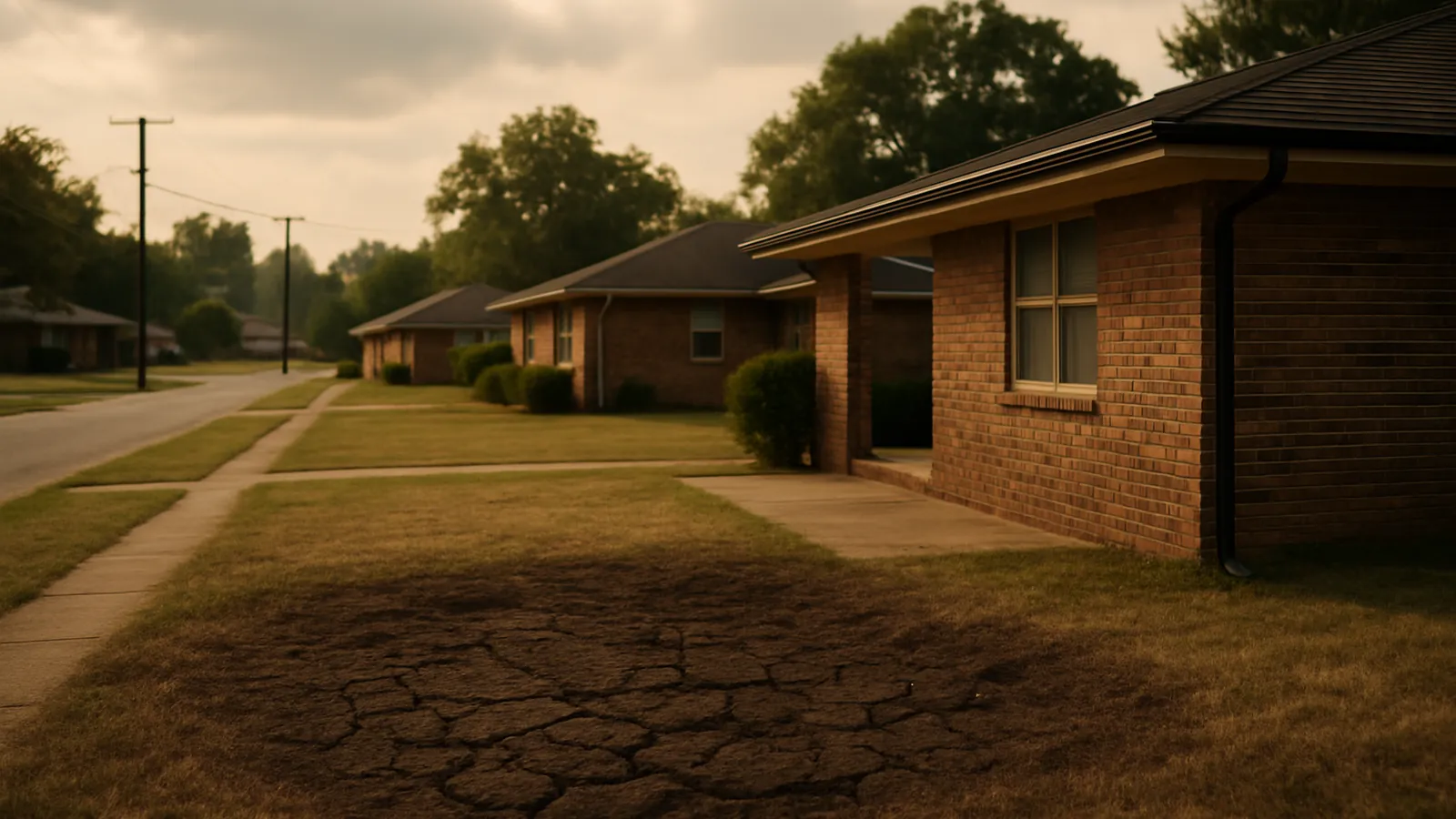
Slab foundation repair in Montgomery runs $3,500–$12,000 for most homes, depending on how much of the slab has lost support and whether interior piers are needed alongside perimeter work. The cause is nearly always the same: Black Belt clay shrinking beneath the concrete.
Slab homes fail differently than pier-and-beam homes. Here's how to read yours.
What a slab does when the clay beneath it moves
A slab-on-grade foundation is a single concrete plane resting directly on soil. It has no crawl space to inspect and no beams to sister — which means when the vertisol clay beneath it swells in winter and contracts in August, the slab has to follow. Uniform movement rarely causes damage. The problem is differential movement: one edge of the house holding while another drops, or the perimeter staying put while the center dishes downward as the clay dries out beneath the middle of the floor.
That differential is what racks door frames, cracks tile along a line, and separates trim from walls. By the time it's visible upstairs, a laser survey will usually show an inch or more of elevation difference across the floor plan.
Perimeter piers, interior support, or both
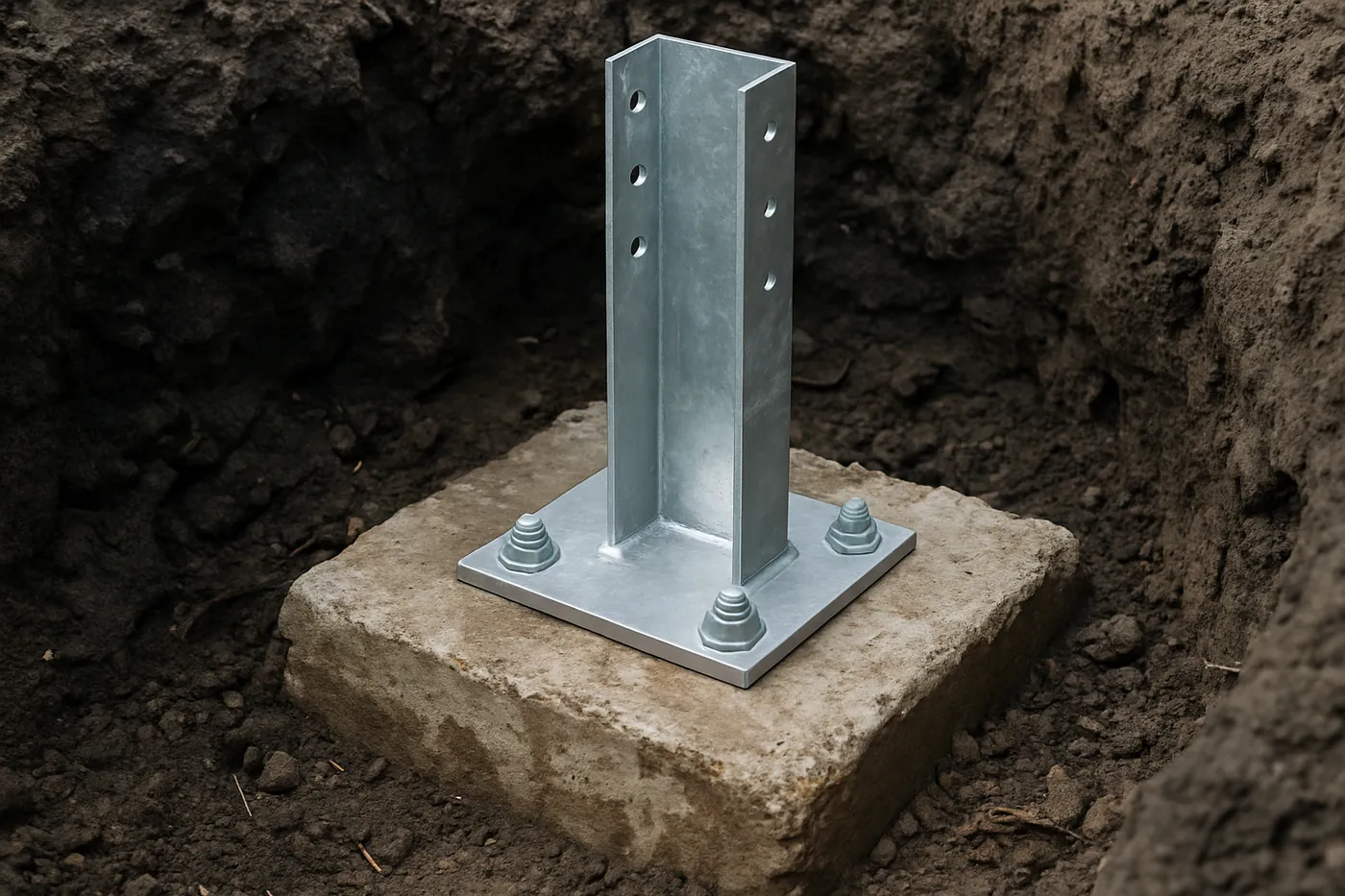
Where the survey shows the outside edge has dropped, perimeter piers carry the slab's bearing walls to stable ground — the same steel columns used on any foundation, bracketed to the slab's thickened edge. Where the low point is in the middle of the floor plan, interior support is required: either slab piers installed through small openings in the concrete, or polyurethane injection lifting the slab back onto a stable base. Many Montgomery homes need a combination, and the survey decides the proportion — not a package price.
Newer subdivisions have their own version
Growth around Pike Road, Prattville, and east Montgomery layered engineered fill over native Black Belt clay. Fill consolidates on its own decade-long schedule while the clay underneath keeps its seasonal rhythm, so a fifteen-year-old house can show movement that reads like a much older problem. Distinguishing fill settlement from clay cycling is the first diagnostic question on these lots, and it changes the pier depth specification.
What are the honest options for a moving slab?
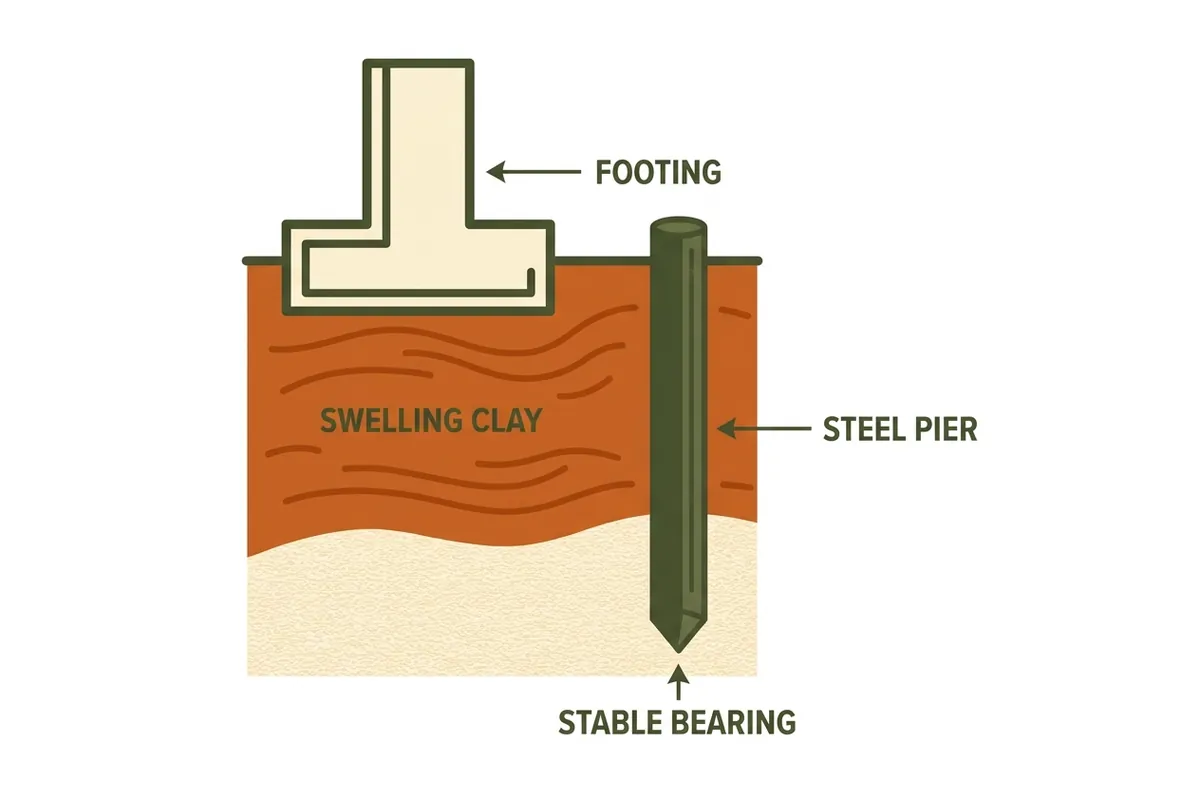
Mid-century slab suburbs sit directly on the Black Belt's most expansive clay, so the slab rides every wet-winter swell and every August shrink with nothing in between.
| Option | What it does | The version of it you get here |
|---|---|---|
| Deep support | Piers beneath the slab carry it past the clay | The decisive fix: the slab stops riding the vertisol and rests on the chalk below |
| Fill the gap | Grout replaces soil that pulled away underneath | For voids the shrink half of the cycle opens under the middle of the slab |
| Water discipline | Evens out the moisture the ground sees in a year | Soaker-hose discipline at the slab edge in late summer is a genuine intervention here |
| Repour the section | Removes and replaces concrete past saving | For sections the cycling has already broken past the point of carrying load |
The perimeter dries fastest and swings hardest, which is why Black Belt slab damage concentrates at the edges and the middle lags behind. A repair that ignores the edge moisture repeats itself.
Slab repair questions, straight answers
How do I know if my slab is moving?
The house tells you before the concrete does: doors that rack out of square, diagonal cracks from door corners, tile or vinyl cracking in a line, and floors that read out of level with a laser. A crack in the slab itself is common and often harmless — it's the pattern of movement around it that matters, which is what the evaluation measures.
Can a slab home be lifted, or only stabilized?
Both are possible. Perimeter piers stabilize and often recover some elevation; interior slab piers or polyurethane injection address the middle of the floor where the clay has dropped away. Which combination your house needs depends on where the survey shows the low points, and the scope says so plainly before work begins.
Is slab repair more disruptive than working on a crawl space home?
It's different rather than worse. Perimeter work happens outside. Interior piers require breaking small openings in the slab, which are patched at completion — that part happens inside and does create dust and noise for a day or two. The scope names exactly how many interior locations are planned.
My slab home is only fifteen years old. Should it be moving already?
On Black Belt clay, yes, it can be. Newer subdivisions often layer builder fill over native vertisol, and the two settle on different schedules while the clay underneath keeps cycling. Age tells you less here than soil does — we've measured meaningful movement on homes barely out of warranty.
What about plumbing under the slab?
It's worth ruling out. A leaking supply or drain line beneath a slab washes out soil and produces settlement that looks exactly like clay movement — and repairing the foundation without fixing the leak guarantees a return visit. When the pattern suggests it, we say so and recommend a plumbing test before scoping structural work.
Get a free Montgomery foundation evaluation
Tell us what the house is doing — stair-step cracks, doors that stick every August, sloping floors, separating trim — and we’ll schedule an evaluation with photos and measurements. We reply the same business day.