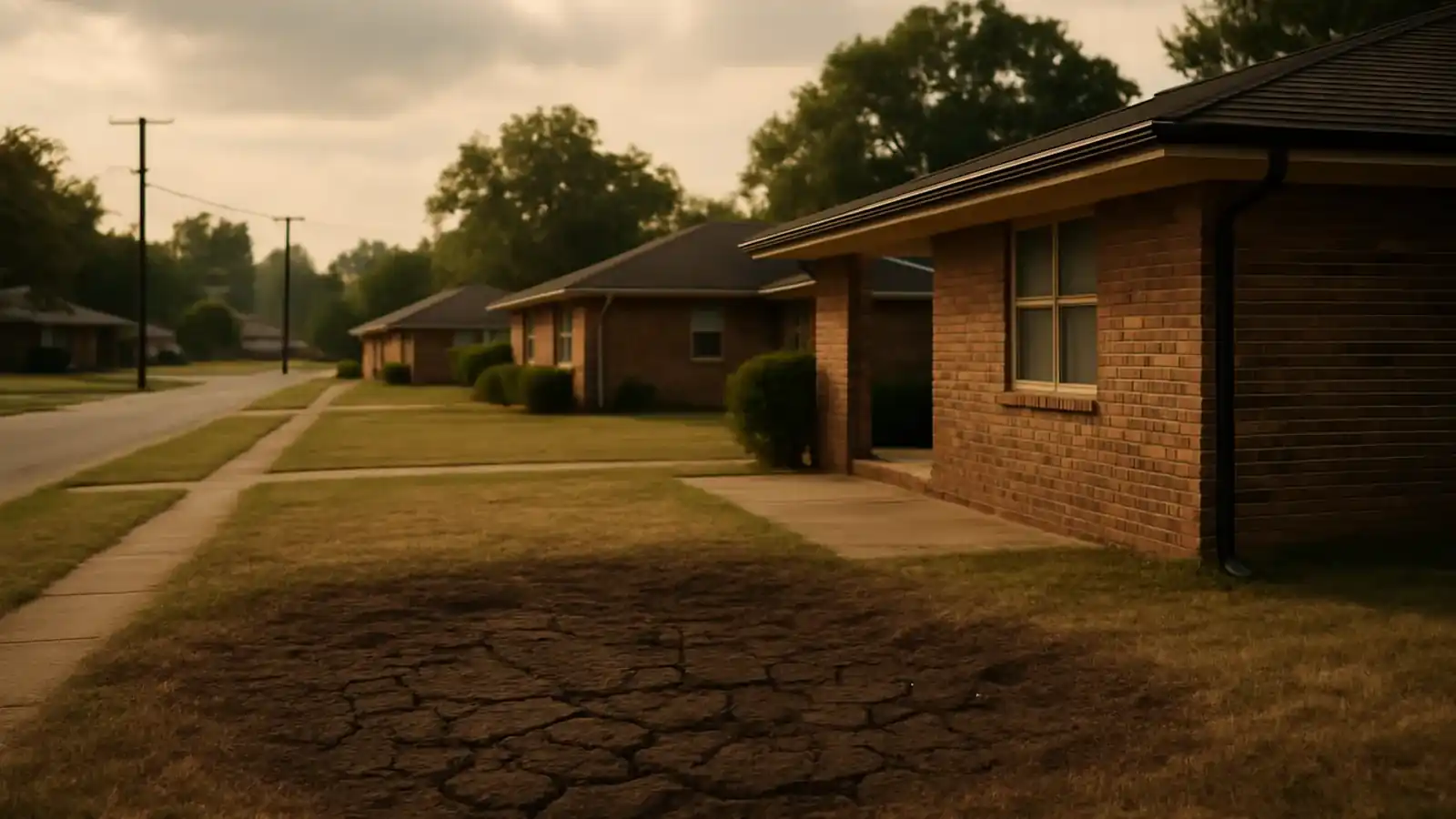
Black Belt vertisols move more than almost any soil in the Southeast, so the answers below are organized around the seasonal cycle: what swelling does in a wet winter, what shrinking does in a dry August, and when to act.
How do I know if I have a problem?
In Montgomery the first signs are usually a door that binds in late summer and works again by winter, a crack that comes back no matter how often it is patched, or a floor that seems lower along one wall. Those are worth understanding before they are worth worrying about.
How urgent is my foundation problem?
Most are not emergencies. What matters is whether movement is continuing, and one look cannot tell you that, which is why a dated baseline is often the right first step. Doors sticking in August and freeing up by December usually describe the soil cycling rather than a failure.
What makes Montgomery soil so difficult?
Black Belt vertisols formed over Selma Chalk are among the most expansive soils in the Southeast. They take on water and swell against footings through wet winters, then shrink away in dry late summers. It is that repeated movement, not any single wet year, that moves a foundation.
Why does the frost line never come up?
Because it barely applies. Alabama foundations are designed around moisture movement rather than freeze depth, so advice written for northern markets about footing depth and frost heave does not describe what is happening under your house.
Will insurance pay for it?
Rarely for soil movement, which most policies exclude. Sudden damage from a specific covered event is a different question. Read the exclusions before assuming either way, and keep the evaluation paperwork whatever the answer.
What does foundation repair cost in Montgomery, and why do quotes differ?
Two things set most Montgomery prices: how much of the foundation has moved, and how far down the piers must go to reach ground that stays put. That is why two fair quotes for the same house can be thousands apart.
What does repair cost?
A full repair usually runs $4,000–$15,000, and individual piers commonly cost $1,200–$3,000. The biggest honest variable in Montgomery is the depth to stable ground: the clay's seasonal movement reaches several feet down, and every extra foot means more pier sections at each spot.
What happens if I go ahead?
After you agree to a repair: how long it takes, what paperwork to keep, and what passes to a buyer if you sell.
Are both slab and pier-and-beam homes covered?
Both, and often on the same house. Mid-century slab-on-grade suburbs, older in-town homes on brick pier-and-beam, and additions that are one bolted onto the other are all common across the River Region.
Does the warranty transfer if I sell?
That is up to the contractor's terms, so get the answer on paper, not just in a phone call. A buyer's home inspector will ask for that document when the house is sold.
What if I just want a second opinion?
Plenty of homeowners ask for one. Many local specialists don't charge for the first visit; ask when they call. Ask to keep the floor elevations and photos whether or not that specialist ends up pricing the work.
Still deciding?
The cost guide walks through each price range, and our services page describes every type of repair. When you want figures for your own house, request an evaluation.
Get a Montgomery foundation evaluation
Tell us what the house is doing (stair-step cracks, doors that stick every August, sloping floors, separating trim) and we'll pass it to one independent local specialist for an evaluation. A local specialist who works in Montgomery will call you back.